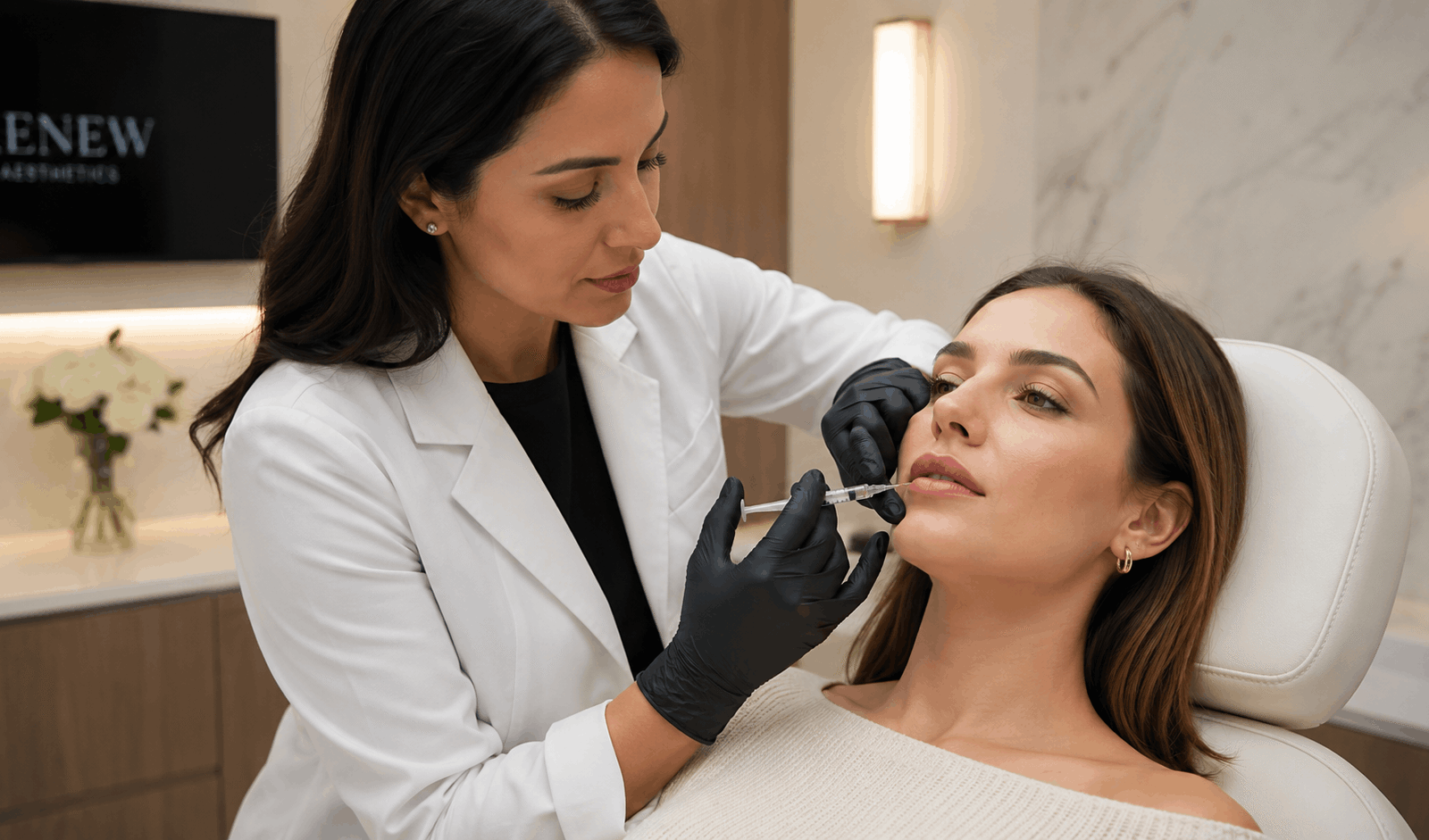
Botox and dermal fillers have become so routine in Cali that patients sometimes treat them like haircuts — fast, predictable, no big deal. They aren’t. Done well, injectables can take 8 to 10 years off a face without anyone identifying what changed. Done badly, they make a 35-year-old look 35-but-fake. The difference isn’t the product — it’s the injector’s understanding of facial anatomy and how it ages.
Botox vs filler: different jobs
Half the confusion in this category comes from using “Botox” as a catch-all. They’re separate categories.
Botulinum toxin (Botox, Dysport, Xeomin) relaxes muscles. Treats expression lines.
Dermal fillers (hyaluronic acid, calcium hydroxylapatite, polylactic acid) restore volume. Replace the structural fat and bone resorption that comes with aging.
Asking for “Botox for my smile lines” usually means filler. Asking for “filler for my crow’s feet” usually means toxin. A good injector tells you which fits your concern.
Where toxin works
Botulinum toxin shines in the upper third:
- Horizontal forehead lines
- Glabella (the “11” between the brows)
- Crow’s feet
- Bunny lines on the nose bridge
Validated uses in the lower face exist — lip flip, masseter reduction, downturned mouth corners — but require more anatomical training. Lower-face Botox done wrong creates asymmetric smiles.
Where fillers belong
Modern filler follows the “pyramid of aging”:
Foundation — cheekbones, temples, jawline. Support the entire face. Patients in their 30s and 40s often see the biggest visual improvement from this layer.
Middle — nasolabial folds, marionette lines, pre-jowl sulcus.
Surface — lips, fine perioral lines, tear trough.
Treating the surface without supporting the foundation produces the “filler face” look. A well-supported face needs less surface filler, not more.
Reading the product list
The most common HA fillers in Cali are Juvederm (Vycross and Volift lines), Restylane (Lyft, Defyne, Refyne), and Belotero. Each has different rheology — some firmer for deep placement, some softer for lips. Knowing which product is being injected and at what depth is part of informed consent.
How long results last
Botox: 3–4 months on average. Filler duration: lips 6–9 months, cheeks 12–18 months, jawline 12–24 months, deep structural placements occasionally beyond 2 years. High metabolism and exercise shorten duration.
Side effects worth knowing
Botox: brow or eyelid heaviness if placed too close to the frontalis. Asymmetric smile if the lower face was over-treated. Both resolve in 4–6 weeks.
Fillers: bruising 5–10 days. Lumpiness 2–3 weeks. Rare but serious: vascular occlusion — which is why hyaluronidase must be on-site at any clinic offering filler.
Common mistakes
Treating wrinkles in someone who needs volume. Unbranded fillers without traceability. “Botox + filler packages” below market — the math doesn’t add up. Treating too often, training the eye to see the result as the new baseline.
Prices in Cali (2026)
Botox: 550,000 to 1.3 million COP per area. Full upper-face treatment 1.4 to 2.5 million COP.
HA filler: 1 to 2.5 million COP per syringe. Most patients need 1–3 syringes.
Combined upper-face refresh (toxin + 2–3 syringes of foundation filler): 3.3 to 6.5 million COP.
Frequently asked questions
Can I fly after? Botox: same day. Filler: wait 24–48 hours.
Before a vacation? Filler bruising can last a week — schedule at least 10 days before a photo event.
Long-term safety? Both have decades of safety data. Repeated high volumes carry cumulative risks.
Frozen look? Only with too much toxin in too many areas. Modern dosing aims for natural movement with softened expression.
The takeaway
Botox and fillers are tools, not treatments. The right tool for the right concern, in the right hand, produces results that last and read as natural. Find an injector who starts with a facial analysis, not a price list.